Thursday, August 18, 2011

Twas the Night Before, Part 1

It's almost Back-to-School time and the pressure is heating up. Getting everyone out the door in the morning to school, to work, to the sitter can really be a challenge. But whether you're trying to get started on a school day or a weekend with soccer games, picnics and trips to Grandma's house, the key is THE NIGHT BEFORE!

Before turning in for the night, spend a few minutes preparing and you will save hours of valuable time in the morning. You'll leave the house calmer, on time and even with breakfast in your tummies! There are seven ways to achieve this easy-breezy morning, the night before. Here are the first three tips. Next week, we'll examine the other four secrets to a smooth morning.

1. Set out your clothing. This way you will know if jeans need to be washed or if the sweater you want to wear is still at the cleaners. Find the missing shoes and make sure you have clean socks. Need a jacket for an evening activity? Set it out, too. Kids love planning out their clothing and you will love fewer (and maybe no more) meltdowns over what to wear. You might even want to try this clever clothing bag geared to set aside clothing for the whole week. Great for kids!


2. Prepare your bags: Fill your diaper bags, briefcases, backpacks, and purses for the day. Make sure to pack the reports, forms and school assignments or sunblock, hats, cameras or whatever else you need for the day ahead.
3. Don't forget your keys. . . . and your phone and other valuable electronics. Lay them beside your bags (or pack them inside) so you won't spend valuable morning minutes looking for them.

Come back next Thursday for the final four secrets to make leaving the house a breeze.

Thursday, August 11, 2011

A Backpack Place

We're soon to be starting school again and that means bags and backpacks. Do your kids' backpacks always seem to be all over the place -- the couch, the floor, the kitchen table? Much as you may want them to, kids just usually don't take their bags to their rooms, so why not create a place for them to go that the kids might actually use.

Shelves with hooks or pegs are a great place for bags and packs. A simple shelf can be hung on walls near the door that the kids use or even placed directly on the door.


Over the door (wreath) hangers make a great place to hang backpacks on any door.

If you have the space, create shelves or cubby holes for the backpacks to go in.


Individual hooks -- decorative ones, can be hung on walls

and Command Hooks by 3M work well just about anywhere


Whatever method you use for hanging your bags and packs, the most important thing is that they are in a place that is close to where the kids come in and out of the house, they are at a height they can reach, and each person has their own hook.

You might even like one for yourself.

Thursday, August 4, 2011

Gunk Goo Gone

Today's post isn't so much about organization as cleaning, but I want to share this tip with you anyway. Do you get this gunky black stuff on your outside windows and doors? I hope it's not just me, but over the years, it just seems to grow and nothing I've tried gets rid of it.

Until now! I bought Goo Gone for when I was trying to remove scout badges for a shirt. It smells nasty and I've avoided using it much, but it occurred to me today, while cleaning the exterior windows and doors, to try it on this gunk.

I sprayed it on, let it sit for several minutes (that's key, you have to let it sit a bit) and then loosened it with a rag and soapy water. Then, blasted it with a hose on full force. Whalah!

Gunk is gone! Now, some of the gunk on the caulk, didn't fully come off, but I'm pleased with the results. The Goo Gone is really oily and you have to thoroughly wash the doors and windows afterward, but this really made a big difference! If you have gunk, try it!

P.S. If someone tells you to use that Magic sticky stuff to hold your scout badges on the shirt -- grab your Goo Gone and run! It's TOTALLY not worth it!

Thursday, July 28, 2011

New Uses for a Pill Box

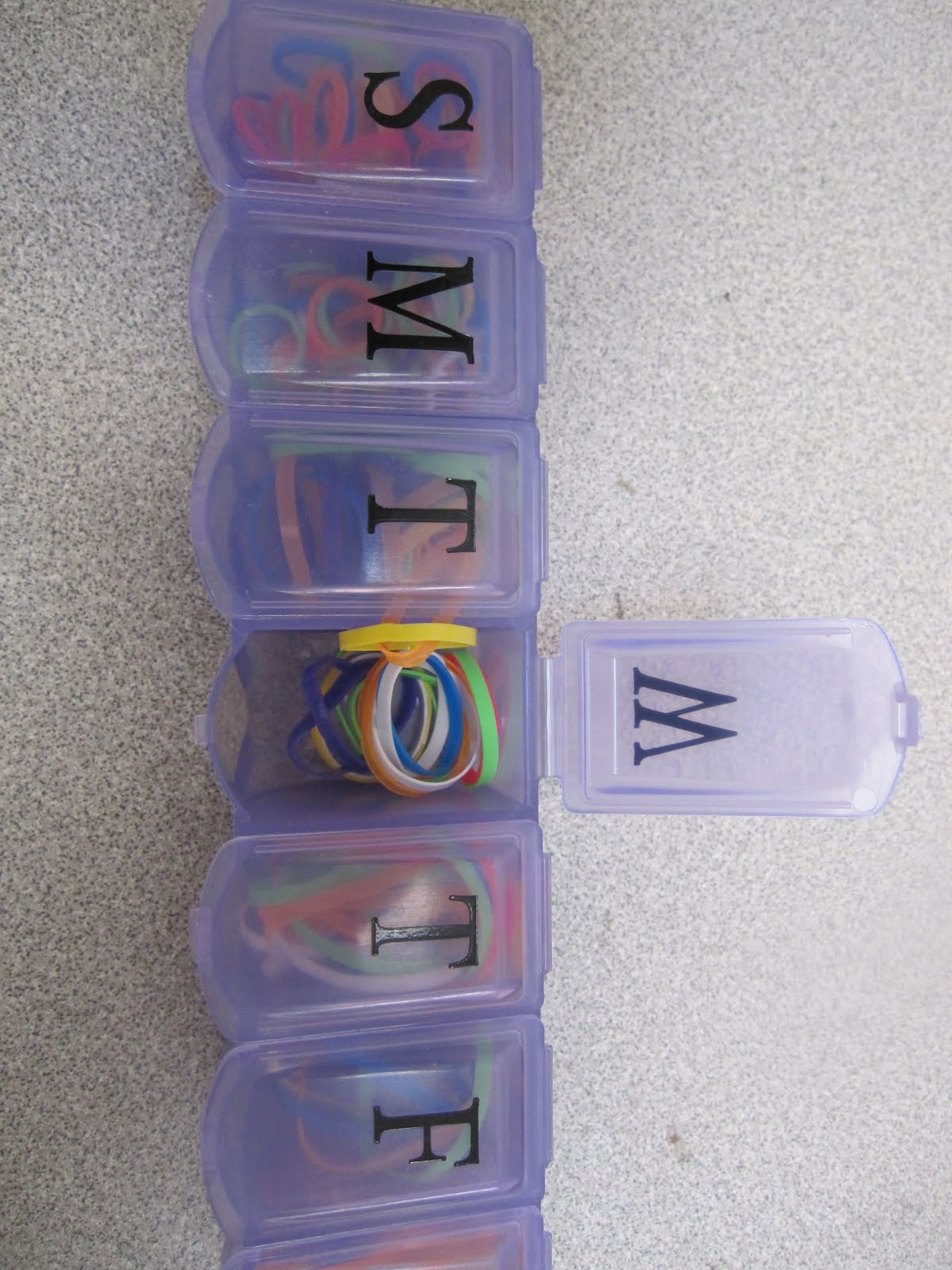
My niece, Katie, and her daughter, Sammy, came to visit recently. Sammy, with hair so long she can sit on it, had a large bag of hair bows for the trip and inside the bag was this clever item:

Katie put enough elastics for a variety of hair do's in a simple weekly pill container. Brilliant!

My sister-in-law, Debbie, said she uses a large pill container for her earrings.

She puts all the pink ones in a row, all the silver ones in another row, etc. I think the smaller pill container would be great for your jewelry when traveling, too.

What great ideas! I wonder what else you can use pill containers for!?

P.S. Katie is an aspiring, up and coming author. You can read more about her exciting literary adventures here.


Wednesday, July 20, 2011

Kids and Chores, Part 4 -- Teens

By the time kids are teens, they’ve discovered tha, no matter how many times you tell them to “empty the dishwasher like a lion” or that they will get popcorn and a movie when all their chores are done, the fact is that household jobs are just not all that fun. And, I think most of us would agree. But, the work still needs to get done and mom should not do it all.

Teens need to participate in the responsibilities at home. As parents, you should be preparing them to live on their own as adults and soon they will have to do all the dishes and all the laundry all by themselves. They need to know, not only the skills of how to do these things, but the assurance that they are capable adults who can take care of themselves, their homes, their cars and even others. Jobs in the home can help teens feel confidence and capability and gives you an opportunity for praise.

A couple of tips on how to stop fighting and start get kids to work:

1) Use a timer. Give a certain time frame to accomplish a job and a reward for doing so: “If you get the dishes done in 20 minutes, you can stay up 20 minutes longer” or watch 20 minutes more of TV, etc. If the job is not done, you will need to exact a consequence: “You were supposed to clean the bathroom in 30 minutes and you took 45 so your bedtime is 15 minutes earlier.” Stick to the consequence so that next time the child knows that the job needs to be done in a reasonable time.

2) Consider giving kids an allowance that is tied to the completion of their chores. We believed in letting our children receive an allowance for jobs which they were then responsible to use for going to the movies, buying school lunch (instead of packing one from home), buying additional clothing or accessories, etc. Kids who want to have spending money on the weekend to hang out with friends tend to do their chores during the week.

3) Have a schedule for cleaning. If I was relaxing on the couch and you kept coming up to me with one job after another, I’d be annoyed. Your teenager is, too. Set a firm list of chores that each child needs to accomplish so he can see when he is done. Set specific times for when the chores should be done. In the summer, first thing in the morning is the best, before playing with friends or video games, etc. During the school year, chores may be split into two times. For example, before school your child may be required to make his bed, put dirty clothes in the hamper and load the dishwasher with breakfast dishes. After school, he may need to fold and put away his laundry and vacuum the family room before going out with friends. Hold onto the car keys until these things are done. If you have a working teen, work with his schedule each week so that doesn’t become a problem.

Teens are quite capable of doing nearly every job in a home. They can complete all facets of laundry, clean all rooms including appliances, prepare meals, take care of yard work, babysit for younger siblings. Don’t be afraid to work with your teen to learn how to do everything that an adult has to do. You never know when your child will be teaching someone else’s child how to wash their whites!

Wednesday, July 13, 2011

Kids and Chores, Part 3 -- Seven toTwelve Year Olds

Many parents feel like they’ve stepped onto a battlefield when it comes to school-age kids and chores. These previously delightful children begin to give you excuses, fail to do their jobs when assigned and often engage in amazingly developed arguments just to get out of doing the work. Remember that children ages six to twelve are often busy with lots of school and after-school activities and while they may have “time” to do these things, they frequently feel overwhelmed. This is no reason to withdraw chores from your “tween’s” list of to-do’s however. Having responsibilities in the home has too many great benefits for your child to let him off the hook.

To make chores go a little easier, be sure to deconstruct the task into manageable steps. Make sure to explain how to do the jobs and show them. I find it helpful, on a Saturday morning when everyone is busy doing their jobs, to go from child to child and spend a few minutes working along with them. I carry a cleaning rag and scrub with them or help to empty a few dishes, encourage and correct them, and then move on to the next child.

Children at this age like to have some say over the tasks they are assigned. Try writing the tasks to be done during the week and then let the children take turns choosing their favorite ones. Do you have kids who like to sleep in too late on Saturday morning? Posting the list first thing Saturday morning and instructing each child to choose four helps get sleepy heads out of bed.

Lastly, have fun. If everyone is working together on a Saturday morning or before school on weekdays, it’s a little more fun. Rewards can help boost participation and consequences can help them stay on track. Most of all, don’t forget positive comments and lots of praise for what they are doing. They might not act like they care about how nice the sink and counter are cleaned, but they will remember that you are proud of them.

In addition to jobs listed in Kids and Chores Parts 1 and 2, kids this age can:

1. Hand wash dishes

2. Empty and load dishwasher

3. Prepare simple meals and/or parts of the meals (especially salads, vegetables, etc.)

4. Clip coupons

5. Write grocery lists

6. Help with grocery shopping

7. Take out trash and recycle

8. Clean the bathroom (counters/sinks/toilets/mirrors)

9. Take care of pets (walking, brushing, litter boxes, backyard clean-up, etc)

10. Rake leaves

11. Pull weeds

12. Sort and wash laundry

13. Change bedding

14. Vacuum

15. Dust

16. Sweep floors and porches

17. Mop floors

18. Wash windows

19. Make and pack lunches

20. Wipe table and counters after meals

21. Shake rugs


Wednesday, July 6, 2011

Kids and Chores, Part 2 -- Four to Six Year Olds


Kids and chores are a challenge, but knowing what jobs your little ones can accomplish can be a big help in keeping your home organized. Four to six year olds are at a delightful age and perfect for learning how to contribute by doing jobs around the house. They have a growing vocabulary and can understand two-part directions (“Wash your face and brush your teeth.”) In addition, they love to please others and are willing to participate with siblings and parents in accomplishing chores. They love to make a game out of doing these things.

In addition to the list published in the Kids and Chores Part 1 post, these children can:

1. Clear the table

2. Set the table

3. Carry in and help put away groceries

4. Make beds and help change sheets

5. Help fold clothes

6. Match socks

7.
Help choose and set out clothes for the next day

8.
Set out backpack, shoes, etc for the next day

9.
Clean their own room

10.
Empty silverware from dishwasher (except sharp knives) and plastic bowls/cups

11.
Empty wastebaskets

12.
Bring in mail and/or newspaper

13.
Use small vacuum to pick up crumbs

14.
Wipe bathroom sink

15. Help wash the car